Before and after wedding flowers for a W10 garden venue
Posted on 27/10/2026
If you are planning Before and after wedding flowers for a W10 garden venue, you are probably juggling two very different moments at once: the ceremony itself and everything that happens before guests arrive and after the last toast is made. That is exactly where thoughtful floral planning makes a huge difference. In a garden setting, flowers do more than decorate. They shape the mood, guide the eye, soften hard edges, and make the whole day feel considered from the first photograph to the final goodbye. Let's face it, a garden venue in W10 already has charm. The right flowers just help it feel intentional.
This guide walks through what "before and after" wedding flowers really means, why it matters, how to plan it properly, and how to avoid the annoying little mistakes that can turn a lovely floral scheme into a logistical headache. You will also find a practical checklist, a comparison table, and a realistic example based on the kind of flow you get at a London garden venue.
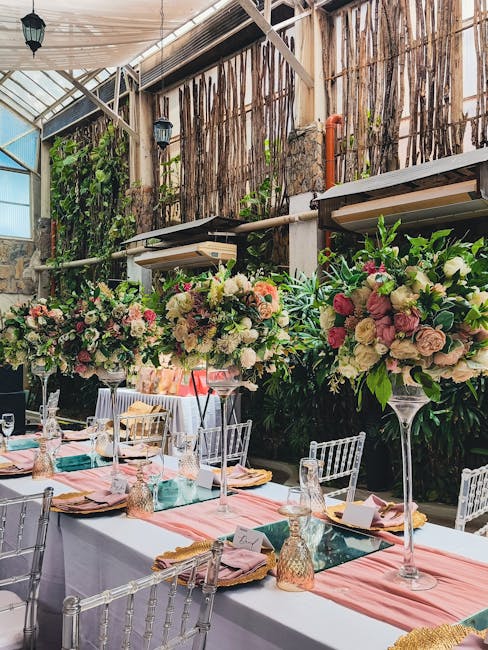
Why Before and after wedding flowers for a W10 garden venue Matters
Garden venues have a built-in advantage: natural greenery, soft light, and a sense of calm that can be hard to manufacture indoors. But that also means your flowers have to work harder in a subtle way. They should enhance the setting without fighting it. If the venue already has mature planting, stone paths, or a courtyard feel, the floral design should look like it belongs there, not like it was dropped in from another event entirely.
For W10 weddings in particular, there is often a practical side to the romance. Access can be tighter than people expect. Parking may be limited. Load-in times may be carefully managed. Weather can also be the great wildcard. A plan for before the ceremony and after the ceremony helps you think beyond the bouquet moment and into the full lifecycle of the flowers on the day.
That matters because wedding flowers are not just one arrangement. They are a sequence: arrival pieces, aisle styling, ceremony focal points, table arrangements, bouquet handling, buttonholes, and then the after-use plan. What happens to those flowers once the couple has left the aisle? Do they move to the dining area? Are they repurposed for the bar, the cake table, or the gift table? Do they travel home? Do they need to remain looking fresh into the evening? These are the questions that separate tidy planning from last-minute scrambling.
Expert summary: The smartest wedding flower plans for a garden venue are not necessarily the most elaborate. They are the ones that can be seen, photographed, moved, and reused well. That is the real trick.
How Before and after wedding flowers for a W10 garden venue Works
The phrase "before and after wedding flowers" is really shorthand for full-day floral planning. Before the wedding, flowers are chosen and styled to support the arrival experience, the ceremony, and the first wave of photographs. After the wedding, the same flowers, or complementary arrangements, are either reused, relocated, gifted, or packed away in a way that keeps waste low and presentation high.
In practice, the process usually looks like this:
- Pre-event design planning: You decide which flowers need to hold up in outdoor or semi-outdoor light, which arrangements must be portable, and where your key visual moments are.
- Ceremony setup: Bouquets, buttonholes, aisle arrangements, pedestal flowers, or table arrangements are installed in the venue before guests arrive.
- Mid-event transition: After the ceremony, selected flowers are moved into reception spaces, repurposed for the top table, or used as decorative accents elsewhere.
- End-of-day handling: Remaining flowers are collected, boxed, gifted to guests, or taken home. Some couples also plan for preservation, though that is a separate decision.
Garden venues tend to reward arrangements with flexibility. A low arrangement can sit on a ceremony table in the morning, move to a signing table later, and then be placed on a dining table after guests sit down. A statement arch may stay in place, but the surrounding arrangements can migrate. The goal is not to overcomplicate things. It is to make sure every stem earns its keep.
To be fair, this is where some couples get caught out. They think about the bouquet and the photos, but not the half-hour after the ceremony when staff are trying to clear the aisle and reset the room. A good florist will help map that transition clearly. If you are shopping locally, a specialist such as wedding flowers in North Kensington W10 can be a useful starting point for discussing the full sequence rather than a single display.
Key Benefits and Practical Advantages
Planning before and after wedding flowers properly gives you more than a pretty room. It makes the day smoother, more efficient, and often better value too. Here are the main benefits.
- Better visual continuity: The style feels cohesive from arrival through to the last dance.
- More use from the same flowers: Ceremony pieces can often be reused at reception, which helps reduce waste.
- Less rush on the day: When the transitions are planned, staff and florists are not improvising in real time.
- Stronger photography: Flowers that are positioned well before guests arrive create cleaner, calmer images. Later, repurposed pieces keep the reception looking polished.
- Potential cost efficiency: Reusing arrangements can stretch the budget further, even if the initial design is slightly more considered.
- More sustainable choices: Reuse and reduced duplication can lower unnecessary floral waste.
There is also a quieter benefit that people do not always mention: peace of mind. When you know the flowers have been thought through from start to finish, you are less likely to keep glancing at the arrangements and wondering if something has been forgotten. And honestly, on a wedding day, that mental load matters.
If you like the idea of floral consistency across the entire day, you may also want to explore style-led collections such as wedding flowers, bridal bouquets, and wedding table arrangements to see how the pieces can work together.
Who This Is For and When It Makes Sense
This approach suits couples who want their florals to do more than look nice for an hour. It is especially useful if your venue has an outdoor ceremony area, a garden patio, a marquee-style reception, or a reception room that opens into green space. If your venue layout involves moving guests from one area to another, the "before and after" plan becomes even more relevant.
It also makes sense if:
- you want ceremony flowers to carry into the reception;
- you are working with a moderate budget and want better value from each arrangement;
- your wedding schedule is tight and setup time is limited;
- the venue has restrictions on delivery, access, or break-down timing;
- you care about sustainability and would rather reuse than duplicate;
- you want the day to feel lush but not overcrowded.
Not every wedding needs this level of floral choreography. A very small civil ceremony, for example, may only need a bouquet, buttonholes, and a couple of simple arrangements. But if you are styling a W10 garden venue and want the space to evolve over the day, this approach is a very sensible one. Truth be told, it is usually the difference between "beautiful enough" and "everything feels considered".
Step-by-Step Guidance
1. Start with the venue flow, not the flowers
Before choosing specific blooms, map the day. Where do guests arrive? Where do they gather first? Where is the ceremony held? Where do they move next? Where do photographs happen? Once you understand the movement of people, you can place flowers where they will actually be seen and used.
2. Decide which arrangements must travel
Some flowers stay put, others should move. A ceremony entrance arrangement might become a reception display. A top table arrangement may be repurposed for a cake table later. Not every piece needs to be mobile, but the movable ones should be built with transport in mind. Compact bases, secure mechanics, and sensible water supply matter more than people think.
3. Choose flowers that suit the season and the setting
Garden venues look lovely with seasonal stems because they tend to feel natural rather than forced. In a London setting, weather can shift quickly, so durability matters too. Sturdier flowers and foliage often perform better than delicate blooms that wilt at the first warm spell. If you are aiming for a lighter, romantic look, ask for a style that balances softness with structure.
4. Plan the before-photo moments
There are usually a few photographs that matter enormously: bridal prep details, bouquets on the stairs, ceremony entrance shots, and the full room before guests enter. Flowers should be placed to support these moments without cluttering them. A single elegant arrangement can sometimes photograph better than three smaller pieces crowded together. Oddly enough, less really can be more.
5. Build the after-plan into the brief
This is the bit people forget. Decide in advance what happens after the ceremony. Are the flowers being moved by the florist, venue staff, or a nominated family member? Do you need vases waiting at the reception tables? Are there guests who can take arrangements home? If so, which ones? Be specific. "We'll sort it later" sounds relaxed, but it rarely is.
6. Confirm timings and handover details
Floristry on a wedding day runs on timings as much as taste. Check delivery windows, installation time, and collection time. If flowers are being reused, someone needs to know exactly when and where the move happens. Even a lovely design can lose its impact if it sits in a corridor because nobody quite knew whose job it was.
Expert Tips for Better Results
After plenty of wedding-day planning conversations, a few patterns keep showing up. These are the small details that improve the result without making the day feel over-managed.
- Choose a palette that works in daylight and evening light. Whites, greens, soft pinks, and muted lilacs often hold up well in garden settings, while richer reds or purples create stronger evening contrast.
- Use repetition thoughtfully. Repeating the same flower family in bouquets, buttonholes, and table designs creates calm and cohesion.
- Allow for movement. If a piece needs to be carried, make sure it is not too tall or awkward. Beautiful and portable is the sweet spot.
- Keep the wind in mind. A garden venue can be calm one minute and breezy the next. Loose petals are lovely, but not if they blow into the soup.
- Ask for a test of scale. Some arrangements look very different in a studio than they do against trees, stone, or glass.
- Think in zones. Entrance, ceremony, dining, and exit all need slightly different floral treatment.
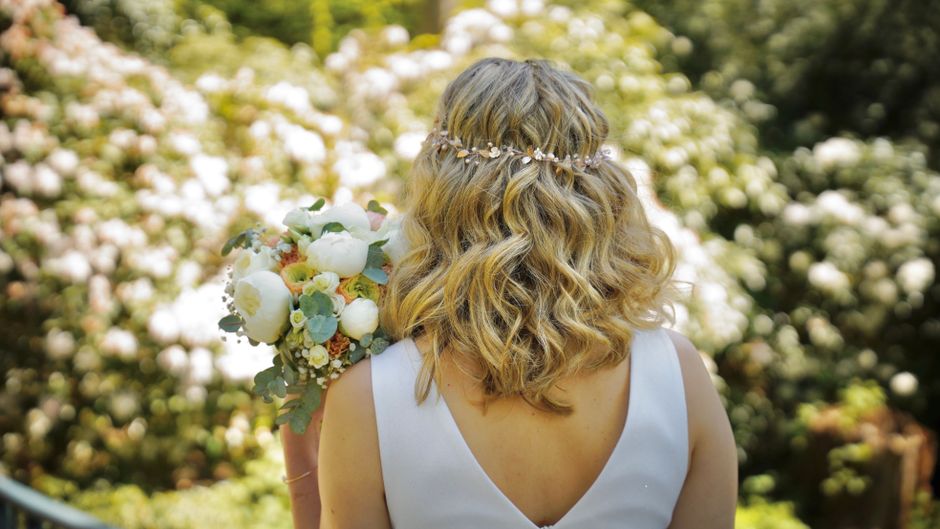
One simple trick is to use fewer styles, but use them well. A well-designed bridal bouquet, coordinated bridesmaid bouquet, and a handful of table arrangements can feel more elegant than a dozen disconnected ideas. If you want to look at the supporting pieces, items such as wedding buttonholes, bridesmaid bouquets, and wedding corsages can round out the full picture neatly.
And here is a small, slightly unglamorous truth: good flower planning is often more about preventing problems than creating drama. Which, in a wedding context, is exactly what you want.
Common Mistakes to Avoid
There are a few mistakes that come up again and again. None of them are catastrophic, but they can make the day feel less polished than it should.
- Planning only for the ceremony. Beautiful aisle flowers are great, but what happens after the vows?
- Choosing arrangements that are too delicate for transport. Some designs look dreamy but collapse after one move.
- Forgetting the venue's layout. A flower scheme that works on paper may not work across multiple spaces.
- Ignoring timing pressure. If setup and turnaround are tight, complicated floral plans can become stressful very quickly.
- Over-ordering duplicates. Sometimes people buy separate flowers for ceremony and reception when repurposing would do the job better.
- Not naming the person responsible for moving arrangements. That tiny gap in responsibility can cause a surprising amount of confusion.
Another common issue is style drift. The bouquet is romantic, the table flowers are modern, and the ceremony display is almost tropical. Individually, they may be fine. Together, they can feel a little scattered. You do not need everything to match perfectly, but it should feel as though the same eye made all the decisions.
Tools, Resources and Recommendations
You do not need a warehouse of equipment to manage wedding flowers well. But a few practical tools and resources make the whole thing easier.
- Venue layout or floor plan: Essential for mapping arrival, ceremony, and reception areas.
- Flower mood board: Useful for showing colour, texture, and style direction.
- Timing schedule: Keeps delivery, setup, ceremony, and repurposing on track.
- Recipient list for after-use flowers: Handy if you are gifting arrangements to family, friends, or guests.
- Vases or containers for repurposed flowers: Often overlooked, but very useful for reception tables.
- Care guidance: Basic flower care matters if arrangements need to stay fresh through a long day.
If you are sourcing locally, it helps to work with a florist who understands not only the flower choices but the venue logistics too. A local North Kensington florist with experience in wedding planning, such as a florist in North Kensington W10, can usually advise on what will work best in the area's venues and typical event timings. You can also review practical information like delivery details and flower care advice so you know exactly how your arrangements are likely to arrive and hold up.
If you prefer a more complete browsing experience, the store pages for white flowers, pink flowers, and mixed colour flowers can help you narrow a palette before you speak to someone about the final design.
Law, Compliance, Standards, or Best Practice
For wedding flowers, "compliance" is mostly about venue rules, safe setup, and sensible business practice rather than heavy regulation. Still, it matters. In London, many venues have requirements around delivery times, waste removal, access routes, fire exits, and where items can be placed. A florist should work within those rules and keep walkways clear. That is standard best practice, not just courtesy.
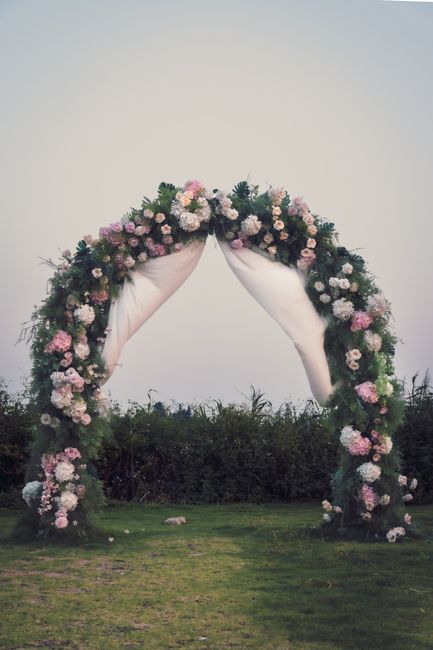
If candles, wires, stands, or freestanding structures are part of the design, they should be used carefully and positioned so they do not create avoidable hazards. Garden settings can also include uneven ground, steps, or damp surfaces after rain. A responsible setup takes all of that into account. No one wants an arch that looks lovely but wobbles in a breeze. Not ideal.
It is also good practice to agree on ownership of the flowers once the event ends. Who keeps them? Who clears them? Who is allowed to repurpose them? The answer should be clear in advance, especially if you want arrangements donated, divided among guests, or moved to another area. This is less about law and more about avoiding awkwardness on a busy day.
For broader trust and service expectations, you may also want to review a florist's guarantees, terms and conditions, and returns and refund information before placing an order. Those pages help set realistic expectations around delivery, substitutions, and service boundaries.
Options, Methods, or Comparison Table
There is no single right way to do before-and-after wedding flowers. The best option depends on budget, venue layout, and how much movement you want the arrangements to handle. Here is a simple comparison.
| Approach | What it means | Best for | Main trade-off |
|---|---|---|---|
| Ceremony-only styling | Flowers are focused on the vows and photographs, then cleared away | Small weddings or shorter timelines | Less value from each arrangement |
| Reuse from ceremony to reception | Floral pieces are moved or repurposed after the ceremony | Budget-conscious couples and flexible venues | Needs careful timing and transport planning |
| Separate ceremony and reception flowers | Different arrangements are designed for each part of the day | Larger or highly styled weddings | Usually more expensive and more wasteful |
| Hybrid approach | A mix of reusable pieces and a few dedicated reception accents | Most W10 garden venues | Requires clear coordination, but offers balance |
For many couples, the hybrid approach is the sweet spot. You get the ceremony impact, the reception polish, and a bit of flexibility if the weather or timings change. Which, in London, is never a wild possibility. It is just Tuesday.
Case Study or Real-World Example
Imagine a garden venue in W10 with a ceremony on the lawn and dinner inside a bright reception room opening onto the garden. The couple wants a soft romantic look, but they do not want to overfill the space. They choose a white and blush palette with green foliage, then build the plan around three key moves.
First, the ceremony entrance is dressed with two low arrangements that frame the walk in without blocking the view. Second, the aisle ends are kept light and easy to remove, so the space can be reset quickly after the vows. Third, the top table and guest tables use the same floral family but in smaller, more compact versions.
After the ceremony, the entrance arrangements are moved to the reception room and placed near the gift table and bar area. The aisle flowers are repurposed for the signing table and then later grouped with the dining flowers. The result is not a dramatic transformation, but a smooth one. Guests feel the day evolve naturally, and the flowers continue to look intentional at each stage.
The couple also keeps one bouquet for the photographer's detail shots and one small arrangement to gift to the couple's grandparents. That small gesture, honestly, often means more than people expect. Flowers are lovely, but when they move through the day in a thoughtful way, they carry a bit of the day's emotion with them.
Practical Checklist
Use this checklist when planning before and after wedding flowers for a W10 garden venue:
- Confirm the ceremony location and reception flow.
- Note any access restrictions, steps, narrow paths, or timing limits.
- Choose a floral palette that suits the garden setting and the season.
- Decide which arrangements will stay put and which will be reused.
- Confirm who will move the flowers after the ceremony.
- Plan where repurposed flowers will go: top table, bar, gift table, or guest tables.
- Make sure there are enough vases or containers for any flowers being divided up.
- Ask how the flowers will be kept fresh through the full event.
- Check whether any structures, stands, or decor need venue approval.
- Review delivery, setup, and collection timings in writing.
- Keep one backup plan in case of hot weather, wind, or delayed access.
- Agree in advance what happens to flowers at the end of the night.
A small final note: if you can answer the question "what happens to every flower after the ceremony?" then you are already ahead of the game.
Conclusion
Before and after wedding flowers for a W10 garden venue are really about making the whole day feel connected. The flowers should look beautiful at the beginning, carry well through the middle, and still feel purposeful at the end. That is the kind of planning that guests notice without even realising why. Everything just feels calm, elegant, and well handled.
For garden weddings, this approach works especially well because the setting already brings texture and atmosphere. Your flowers do not need to shout. They just need to work with the space, move cleanly between moments, and support the day rather than complicate it. Simple idea. Big payoff.
If you are at the stage of comparing styles, layouts, or seasonal options, it is worth looking at the full wedding range early so you can build the day around one coherent floral story.
Get a free quote today and see how much you can save.
And if you only take one thing away from this guide, let it be this: the best wedding flowers are the ones that still feel right when the music gets louder, the light starts to fade, and the real memories begin.
Frequently Asked Questions
What do before and after wedding flowers mean?
They are the flowers planned for both the build-up to the ceremony and the time after it. That usually includes how arrangements are delivered, where they are placed, how they are reused, and what happens to them at the end of the day.
Why are before and after wedding flowers useful for a garden venue?
Garden venues often have multiple spaces and natural features that can be styled across the day. Planning flowers for both before and after the ceremony helps the whole venue feel cohesive rather than only decorated for one moment.
Can ceremony flowers be reused at the reception?
Yes, often they can. Low arrangements, aisle pieces, and some focal flowers are commonly moved to tables, bars, cake areas, or gift tables after the ceremony. The design just needs to be transport-friendly.
Are before and after wedding flowers more expensive?
Not always. In many cases, reusing flowers can be more cost-effective than buying separate arrangements for every part of the day. The final cost depends on design complexity, flower choice, and labour time.
How do I know which flowers will work best in a W10 garden venue?
Start with the venue layout, season, and amount of sunlight or shelter. Sturdy flowers with good structure often work well in garden settings, especially if the plan includes moving arrangements later.
What flowers are best for a soft romantic garden look?
White, blush, pale pink, and soft green combinations are popular for a romantic look. Many couples also like mixed textures so the flowers feel full without looking heavy.
Do I need different flowers for before and after the wedding?
Not necessarily. Many weddings use one floral palette throughout the day, then adapt the arrangement sizes or placement after the ceremony. A hybrid approach is often the easiest to manage.
Who usually moves the flowers after the ceremony?
It depends on the setup. Sometimes the florist handles it, sometimes the venue team does, and sometimes a trusted family member or usher is nominated. It is best to agree this in advance.
How do I stop flowers looking tired by the evening?
Choose blooms that hold well in the venue conditions, keep them hydrated where possible, and make sure the arrangements are not placed in harsh sun or a warm, drafty spot for too long.
What should I ask my florist before booking?
Ask how the flowers will be delivered, how long setup takes, whether arrangements can be repurposed, what happens if substitutions are needed, and how the florist handles collection after the event.
Is a full floral installation necessary for a garden venue?
No. Many garden venues already have plenty of natural character. Sometimes a smaller number of well-placed arrangements is enough to make the space feel complete. Less can be more, honestly.
Can I keep wedding flowers after the event?
Yes, if you arrange it in advance. Some couples take them home, some gift them to guests, and some divide them into smaller bouquets for family. The key is to plan that decision before the day rather than at the end of it.
How far in advance should I plan wedding flowers for a W10 venue?
As early as possible, especially if you want a specific style, seasonal blooms, or a detailed before-and-after setup. Early planning also helps with access timings and venue coordination, which can be surprisingly important in London.


